(Downloads - 0)
For more info about our services contact : help@bestpfe.com
Table of contents
Les Hyperfractales pour la Modelisation des Reseaux sans Fil
0.1 Les Modèles d’ Hyperfractales
0.1.1 Un Modèle de Propagation qui Génére la Nécessité d’Elargir le Modèle Topologique. L’Effet Canyon
0.1.2 Le Modèle Hyperfractale pour les Relais
0.2 Des Applications pour les Réseaux sans Fil
0.2.1 Procédure de Validation avec des Données
0.2.2 Etude de la Vitesse de Propagation de l’Information dans un Réseau Urbain Tolérant aux Retards
0.2.3 Le Routage de Bout en Bout dans un Reseau Hyperfractale avec Relais
0.2.4 Goulot d’Etranglement
1 Introduction and Motivation
1.1 Technological Context
1.2 Motivation
1.3 Contributions and Structure of the Thesis
1.4 Publications
2 Classic Stochastic Geometry
2.1 Notions of Classic Stochastic Geometry
2.1.1 Model fundamentals
2.1.2 Poisson Point Process
2.1.3 Poisson Line Process
2.1.4 Voronoi Tessellations
2.2 State of the Art of Stochastic Modeling of the Wireless Networks Topologies
2.3 Mobility Estimation in Cellular Networks by Means of Stochastic Geometry
2.3.1 Mobility State Estimation
2.3.2 System Model
2.3.3 Stochastic Geometry and User History based Mobility Estimation: STRAIGHT
2.3.4 Stretch Parameter Computation
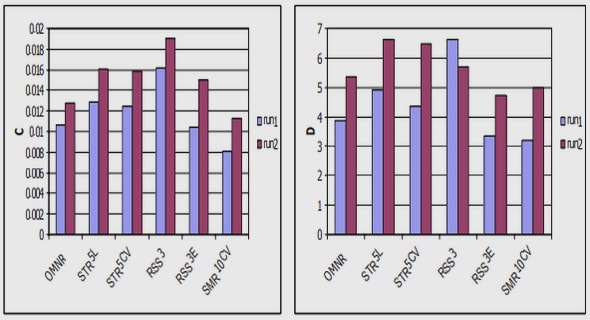
2.3.5 Performance Evaluation
2.3.6 Lessons Learned
3 Self-Similar Geometry. The Hyperfractal Model
3.1 Self-similar Geometry. Fractals
3.1.1 Fractal Dimension
3.1.2 The Sierpinski Triangle
3.2 Self-Similarity of Human Society Geometry. Self-Similarity of Wireless Networks
3.3 Poisson-Shots on Fractal Maps as Precursors of the Hyperfractal Model
3.3.1 Defnition of Poisson-shots on Fractal Maps
3.3.2 Towards the Hyperfractal
3.4 The Hyperfractal Model
3.4.1 Propagation Model as Feature of the Topological Model. Urban Canyon Model
3.4.2 The Support
3.4.3 The Hyperfractal Model for Mobile Users
3.4.4 Hyperfractal Model for Relays
3.5 Stochastic Geometry of the Hyperfractal Model
3.5.1 Typical Points of , rand
3.5.2 Fundamental Properties of the Typical Points
3.5.3 An Alternative Method for Computing the Number of Relays in the Map
3.6 Concluding Remarks
4 Model Fitting with Traces. Computation of Fractal Dimension
4.1 Theoretical Foundation
4.1.1 Density-to-Length Criteria and the Computation of the Fractal Dimension
4.1.2 The Spatial Intersection Density Criterion
4.1.3 The Time Interval Intersection Criterion
4.2 Data Fitting Examples
4.3 Concluding Remarks
5 Application to Ad-Hoc Networks. End-to-End Energy versus Delay
5.1 Introduction and Motivation
5.2 System Model
5.2.1 Preliminary Study on Connectivity with no Energy Constraints
5.3 Main Results
5.3.1 Path Cumulated Energy
5.3.2 Path Maximum Energy
5.3.3 Remarks on the Network Throughput Capacity
5.3.4 Simulations
5.4 Short Study on Load and Bottleneck
5.4.1 System Model
5.4.2 Main Results
5.5 Simulations
5.6 Concluding Remarks
6 Application to Ad-Hoc networks. Delay-Tolerant Networks
6.1 Introduction and Motivation
6.2 System Model
6.2.1 Canyon Efect
6.2.2 Broadcast Algorithm
6.3 Main Results
6.3.1 Upper Bound
6.3.2 Lower Bound
6.3.3 Asymptotic to Poisson Uniform
6.3.4 Extension with Limited Radio Range
6.3.5 Information Teleportation
6.4 Simulations in a System Level Simulator
6.4.1 QualNet Network Simulator Configuration
6.4.2 Urban Vehicular Environment Modeling and Scenario Description
6.4.3 Validation of Upper and Lower Bounds: Constant Speed
6.4.4 Validation of Bounds Under Speed Variation
6.5 Simulations in a Self-Developped Discrete Time Event-Based Simulator
6.5.1 Information Spread Under Hyperfractal Model and Teleportation Phenomenon
6.5.2 Validation of Upper and Lower Bounds on the Average Broadcast Time in the Entire Network
6.5.3 Validation of Bounds on Average Broadcast Time Under Speed Variation
6.6 Concluding Remarks
7 Conclusion and Future Work
7.1 Conclusion
7.2 Future Work
7.2.1 Generalization of the Model for Nodes
7.2.2 Generalization to Poisson Points on Poisson Lines
7.2.3 Generalization to Poisson Voronoi Tessellations
7.2.4 In-Depth Percolation for a Finite Window